
-
 Llámenos +0757 82252350
 -
 Envíanos un correo electrónico manager@gdboanmachine.com


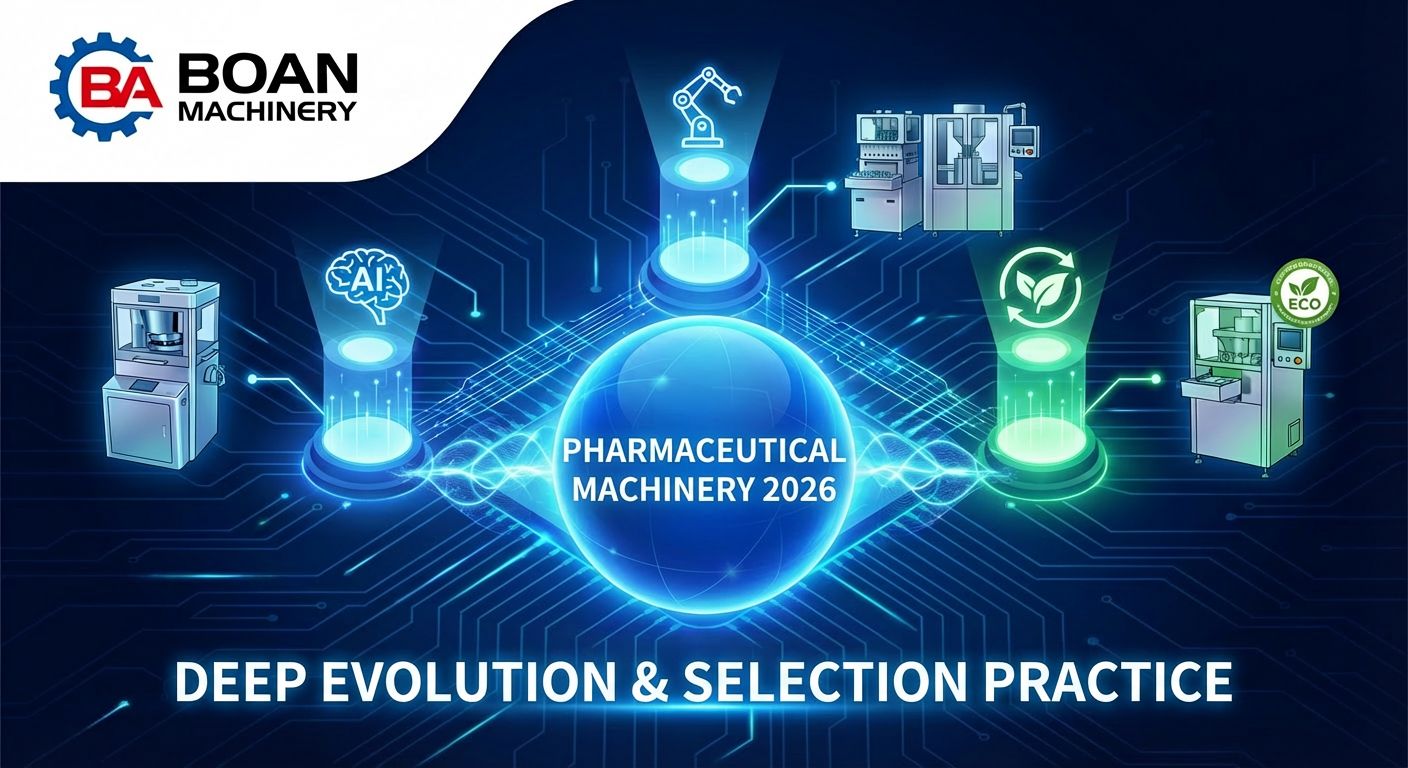
En cuestión de segundos, una tableta completa su recorrido desde el llenado en polvo hasta el envasado individual, gracias a un sistema inteligente que integra en profundidad IA, IoT y maquinaria de precisión. Para 2026, las fábricas farmacéuticas estarán experimentando una transición fundamental: de las "líneas de producción automatizadas" a los "ecosistemas de producción inteligentes".
Según los últimos datos de la industria, el mercado mundial de equipos de procesamiento y envasado farmacéutico se está expandiendo de manera constante a un ritmotasa de crecimiento anual compuesta (CAGR) del 5,4%, proyectado para alcanzarUSD 38.240 millones para 2033La región de Asia y el Pacífico, con una42,1% de cuota de mercado, actúa como motor de crecimiento, y se espera que China y la India alcancen tasas de crecimiento anual de9%y7,7%–12,4%respectivamente, destacando el auge de los centros de fabricación regionales.
Elefecto acantilado de patentesEstá impulsando una oleada de producción de medicamentos genéricos, lo que impulsa directamente la demanda de equipos rentables y de alta eficiencia. Al mismo tiempo, los requisitos regulatorios globales para la trazabilidad de medicamentos se están endureciendo; por ejemplo, la regulación DSCSA de EE. UU. exige la trazabilidad a nivel de unidad en toda la cadena de suministro para 2026.
La tendencia haciaproducción regionalizadaSe está acelerando debido a las necesidades de resiliencia de la cadena de suministro. El objetivo del XIV Plan Quinquenal de China para el avance de los equipos farmacéuticos nacionales y el posicionamiento de la India como la "farmacia del mundo" están impulsando las adquisiciones localizadas y las mejoras tecnológicas.
Producción sostenibleha pasado de ser opcional a esencial. Los equipos de nueva generación adoptan una filosofía de diseño "Green First"; por ejemplo, los sistemas de liofilización de bajo consumo pueden reducir el consumo de energía hasta en un 50%.30%, mientras que los sistemas de biorreactores de un solo uso pueden reducir el uso de agua y energía en75%.
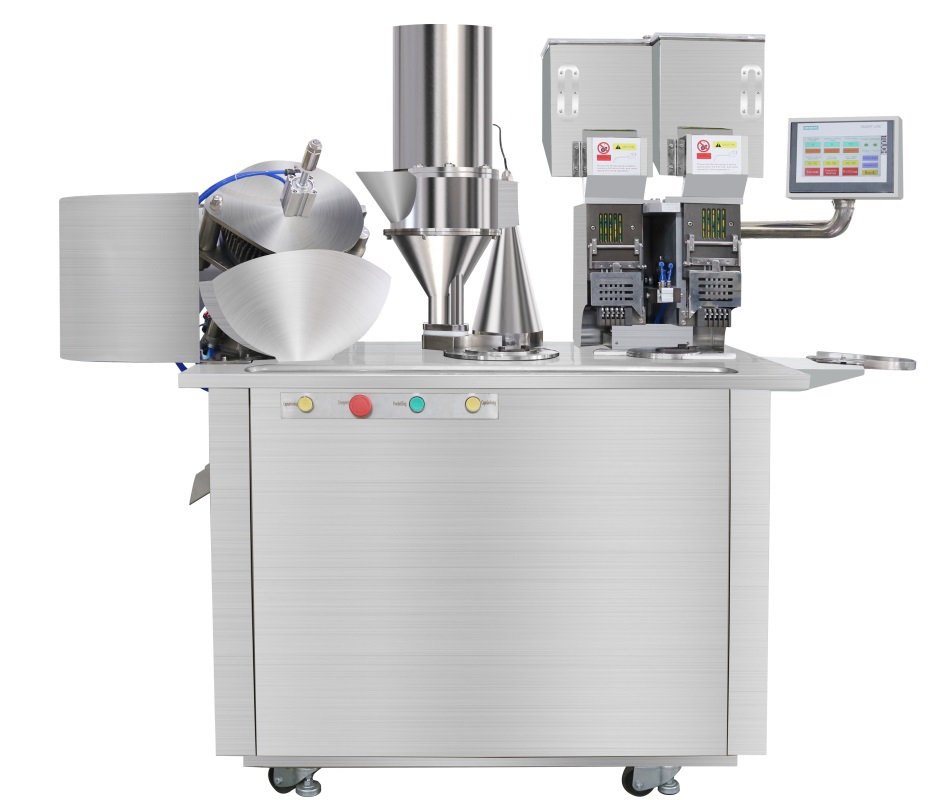
Máquinas llenadoras de cápsulasAhora se logran avances dobles: velocidades de producción de468.000 cápsulas/horay precisión de llenado dentro de±3%Los modelos semiautomáticos están experimentando una renovada demanda en la producción de medicamentos personalizados y en lotes pequeños, satisfaciendo necesidades de producción flexibles de 9.000 a 20.000 cápsulas/hora.
Prensa de tabletasLa tecnología ha evolucionado del control mecánico a la gestión digital. Las prensas rotativas de tabletas de alta velocidad pueden producir casi1 millón de tabletas/horaEl avance principal reside en los sistemas de control de calidad integrados en tiempo real que monitorean el peso y la dureza de cada tableta a través de sensores y rechazan automáticamente los productos que no cumplen con las especificaciones.
Máquinas de llenado de cápsulas líquidasAbordar los desafíos de biodisponibilidad de los fármacos poco solubles. La última tecnología de "sellado de banda" forma un sello de gelatina de 5 a 10 µm en la unión de la cápsula, lo que reduce los costos.30%–50%en comparación con los procesos tradicionales de cápsulas blandas.
Las máquinas modernas de envasado farmacéutico se han convertido en centros de datos de las líneas de producción, necesarios para generar una identidad digital única para cada unidad de medicamento. Los sistemas de visión con IA integrados verifican los códigos DataMatrix 2D a la velocidad de la línea, identificando y rechazando instantáneamente los números de serie problemáticos, una defensa clave contra la globalización.200 mil millones de dólaresmercado de medicamentos falsificados.
Embalaje inteligenteTambién mejora la participación del paciente. Escanear un código QR proporciona acceso a instrucciones electrónicas y recordatorios de medicación, lo que mejora la adherencia y ofrece información valiosa del mundo real a las empresas.
Un requisito clave para los equipos de envasado en blíster en 2026 esflexibilidad del material—Las máquinas deben cambiar entre PVC/Alu, Alu/Alu y nuevos materiales ecológicos en cuestión de minutos. Las máquinas estuchadoras de alta velocidad equipadas con servomotores dobles funcionan a...450 cajas/minutopara contrarrestar el aumento de los costos laborales a nivel mundial.
Tecnología de gemelos digitalesEstá pasando de la prueba de concepto a la implementación a gran escala. Las compañías farmacéuticas pueden crear réplicas virtuales de procesos de producción completos, simulando y optimizando antes del lanzamiento de nuevos productos. Esto reduce las pruebas físicas y el consumo de API, a la vez que permite un mantenimiento predictivo más preciso.
Robots que cumplen con la norma ISO-5Están reemplazando a los operadores humanos en las tareas de llenado y envasado aséptico, minimizando así los riesgos de contaminación. El modelo de "fábrica autónoma" se está desarrollando rápidamente en Europa y Norteamérica ante la escasez de mano de obra.
Diseño modularSe está convirtiendo en una tendencia clave, ya que permite una reconfiguración flexible según las necesidades de producción para evitar el desperdicio de energía. Los datos de eficiencia energética de los equipos también se han convertido en un criterio importante de adquisición.
P1: ¿Cómo elegir entre máquinas llenadoras de cápsulas totalmente automáticas y semiautomáticas?
Completamente automáticoAdecuada para la producción continua a gran escala de un solo producto. Alta eficiencia (hasta 468.000 cápsulas/hora), excelente precisión (con un margen de error de ±3 %) y mínima intervención manual.
SemiautomáticoIdeal para lotes pequeños y medianos (p. ej., medicamentos para ensayos clínicos, medicamentos personalizados). Menor inversión inicial, cambios rápidos y producción flexible de lotes.
P2: ¿Cuáles son las ventajas de las máquinas llenadoras de cápsulas líquidas sobre la tecnología tradicional de cápsulas blandas?
Mayor biodisponibilidad:Los fármacos disueltos en matrices lipídicas mejoran significativamente la absorción.
Menor costo general:La tecnología de “sellado de banda” ahorra30%–50%en costos de producción en comparación con los procesos de matriz rotativa tradicionales.
Mejor estabilidad del proceso:Las bombas dosificadoras precisas y la tecnología de sellado garantizan un llenado preciso y evitan fugas.
P3: ¿Cómo garantizan las modernas prensas de tabletas de alta velocidad la consistencia de la calidad en producciones de un millón de tabletas?
Tecnología analítica de procesos en tiempo real (PAT)Los sensores en línea monitorean la uniformidad del contenido de cada tableta.
Sistemas de retroalimentación de circuito cerrado:Ajusta automáticamente la profundidad y la presión de llenado según los datos del sensor para controlar la variación de peso y dureza.
Rechazo automático:Expulsa inmediatamente las tabletas que se desvían de los parámetros preestablecidos.
P4: ¿Cuáles son los principales desafíos en la implementación de sistemas de embalaje inteligentes? ¿Cómo superarlos?
Desafío 1: Complejidad de la integración del sistemaRequiere una conexión perfecta de sistemas de codificación, inspección de visión, gestión de datos y ejecución de línea.
Solución:Elija proveedores que ofrezcan soluciones integradas o asegúrese de que el equipo admita protocolos de comunicación abiertos (por ejemplo, OPC UA) para una integración más sencilla.
Desafío 2: Validación del cumplimiento normativoLos sistemas de serialización deben lograr velocidades de lectura y precisión cercanas al 100% a velocidades de producción.
Solución:Exigir a los proveedores que proporcionen soporte detallado para la instalación y la calificación operativa, y seleccionar socios con experiencia comprobada en la industria y un sólido soporte técnico local.
P5: ¿Cómo evaluar el costo total de propiedad (TCO) de una máquina farmacéutica?
Más allá del precio de compra, los factores clave de evaluación incluyen:
Eficiencia operativa:Eficacia general del equipo (OEE), tiempo de cambio, consumo de energía por unidad
Costos de mantenimiento:Precios y disponibilidad de repuestos, complejidad del mantenimiento preventivo
Costos de personal:Dificultad de entrenamiento, dependencia de operadores altamente cualificados
Costos de cumplimiento y actualización:Se necesitan actualizaciones de hardware y software para cumplir con las regulaciones futuras
Riesgo de tiempo de inactividad: Tiempo medio entre fallos (MTBF) y tiempo de respuesta de emergencia del proveedor
P6: ¿Cómo optimiza específicamente la tecnología de gemelo digital las líneas de producción?
Puesta en marcha y optimización virtual: Simule procesos completos en un entorno virtual antes de la instalación física o el lanzamiento del producto para identificar y resolver posibles problemas.
Mantenimiento predictivo:Combine datos de sensores de IoT con modelos digitales para predecir con precisión el desgaste de los componentes y planificar ventanas de mantenimiento óptimas.
Capacitación de personal:Los operadores pueden capacitarse sobre el funcionamiento del equipo y la resolución de problemas en un entorno virtual seguro y sin riesgos.
P7: Además de la lectura de códigos, ¿qué más puede hacer la inspección visual con IA en envases inteligentes?
Comprobaciones de integridad del paquete: Detectar la integridad del sello del blíster, la estanqueidad de la tapa y la alineación de la etiqueta.
Inspección de la apariencia del producto:Identifique astillas, grietas, manchas o inconsistencias de color en las tabletas.
Detección de falsificaciones y confusiones:Comparar las características de las imágenes para evitar la contaminación cruzada de diferentes paquetes de medicamentos.
Verificación de documentos:Comprueba automáticamente si el prospecto dentro de la caja coincide con el lote del medicamento.
Conclusión
La evolución de la maquinaria farmacéutica en 2026 trasciende el rendimiento de cada máquina y se orienta hacia...Integración de sistemas e interconectividad de datosDesde el llenado de cápsulas hasta el control de calidad de las tabletas, desde las innovaciones en el llenado de líquidos hasta la generación de envases inteligentes, cada eslabón debe integrarse en la red neuronal digital de la fábrica inteligente. Fabricantes capaces de ofrecer...Modular, digital y sostenibleLas soluciones liderarán la industria, mientras que quienes se mantengan en el nivel mecánico tradicional se enfrentarán a desafíos significativos. El futuro pertenece a los socios que ofrecen no solo equipos, sino también optimización continua, garantía de cumplimiento y servicios de análisis de datos.

 Jinhai Plaza, No. 21, Jihua 5th Road, Chancheng District, Foshan City, Guangdong Province, China
  +0757 82252350
  +8618613054883
  manager@gdboanmachine.com