
-
 Llámenos +0757 82252350
 -
 Envíanos un correo electrónico manager@gdboanmachine.com


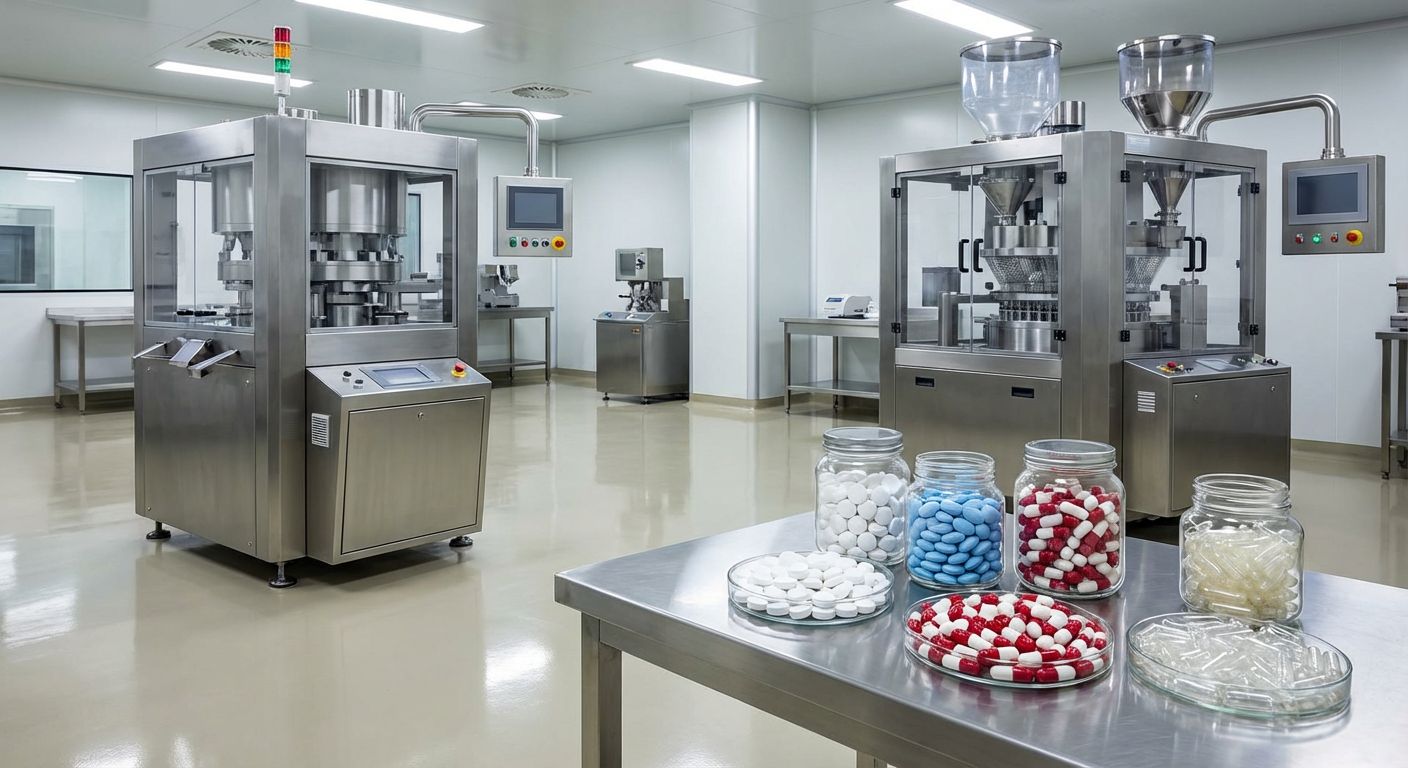 Introducción: El papel central de las pastillas en la atención sanitaria moderna
Las píldoras, como representantes de las formas farmacéuticas orales sólidas, representanmás del 70%de todas las formulaciones de medicamentos a nivel mundial (datos de la Organización Mundial de la Salud), lo que las convierte en una parte indispensable de los sistemas de administración de medicamentos. Con el rápido avance de la tecnología de formulación, las píldoras han evolucionado de simples polvos comprimidos a...multifuncional e inteligentePlataformas de administración de fármacos. Este artículo integra la ciencia de la formulación, la ingeniería mecánica y las prácticas de la industria para proporcionar a los profesionales farmacéuticos una guía completa que abarca la clasificación de formas farmacéuticas, los mecanismos de liberación,maquinaria farmacéutica especializaday tendencias de vanguardia. Incorpora estratégicamente palabras clave populares de la industria, comoFabricación continua,QbD (Calidad por diseño), yFabricación inteligentepara mejorar la difusión y recuperación de conocimientos.
Las tabletas son formas de dosificación sólidas creadas a través decompresión de polvo. Según la clasificación enFormas farmacéuticas sólidas — Comprimidos – Pharmaguideline, sus subtipos incluyen:
Comprimidos comprimidos:El más común, producido por compresión directa utilizandoprensas de comprimidos rotativas/de un solo punzón.
Comprimidos recubiertos:Se dividen en recubiertos de azúcar, recubiertos con película ycomprimidos con recubrimiento entéricoLos recubrimientos entéricos resisten el ácido del estómago, protegiendo el fármaco o la mucosa gástrica, y dependen debandejas de recubrimiento de alta eficienciaorecubridores de lecho fluidizadopara una aplicación uniforme.
Comprimidos masticables: Contienen agentes aromatizantes, no requieren agua para su ingestión y se utilizan a menudogranulación húmedaantes de la compresión.
Comprimidos de desintegración oral (ODT)Se desintegran rápidamente en la saliva (≤30 segundos). El reto de producción radica en equilibrar la resistencia de la tableta con una desintegración rápida, empleando a menudotecnología de compresión directaoprocesos de liofilización, correspondiente aPrensas ODT y líneas de envasado dedicadas.
Comprimidos efervescentesContienen pares ácido-base que generan dióxido de carbono al entrar en contacto con el agua. El entorno de producción exige estrictas...control de humedad(normalmente RH<25%), utilizandomáquinas de embalaje a prueba de humedad.
Comprimidos multicapa: Se produce rellenando y comprimiendo secuencialmente diferentes capas de polvo utilizando unprensa de tabletas multicapa, permitiendo la separación de fármacos o perfiles de liberación complejos.
Comprimidos de liberación controlada: Retrasar la liberación utilizandosistemas matricialesosistemas controlados por membranaLa producción puede implicarEquipo especializado de granulación de liberación sostenidaymáquinas de perforación láser(para tabletas con bomba osmótica).
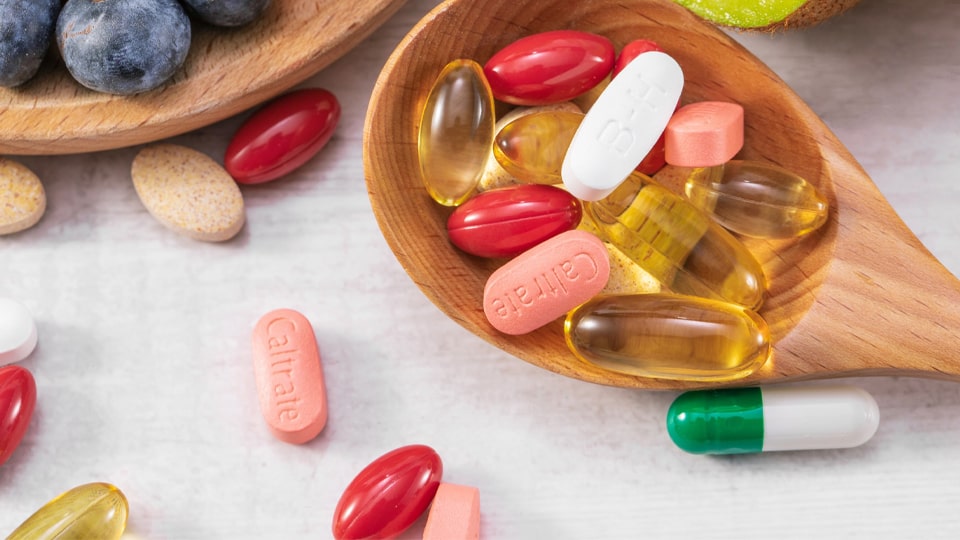
Las cápsulas constan de una cubierta y un contenido, dividido principalmente en cápsulas duras y blandas.Tecnología de fabricación de cápsulas: Innovaciones que moldean el futuro – Tabletas y cápsulasObserva que la innovación tecnológica está impulsando las cápsulas hacia la multifuncionalidad.
Cápsulas duras:Hecho de gelatina oHPMC (cápsulas vegetales)Lleno de polvos, gránulos o pellets. El núcleo de producción es elmáquina llenadora de cápsulas completamente automática, capaz de pasos como separación, llenado y bloqueo. Los modelos de gama alta (por ejemplo, la serie Bosch GKF) pueden alcanzar velocidades de300.000 cápsulas/hora.
Cápsulas de gelatina blanda: Capas de gelatina que encierran líquidos o semisólidos. Producidas medianteproceso de matriz rotatoriaométodo de gotasEl equipo clave es elencapsulador de cápsulas blandas, como la tecnología Pharmaphil del Reino Unido, que permitedosificación precisa del contenidoyPrueba de integridad del sello en línea.
Cápsulas innovadoras: Incluircápsulas entéricas(materiales de carcasa con tratamiento especial),cápsulas de liberación sostenida(relleno de pellets de liberación sostenida), ycápsulas con contenido innovador(por ejemplo, rellenos de sistemas autoemulsionantes).
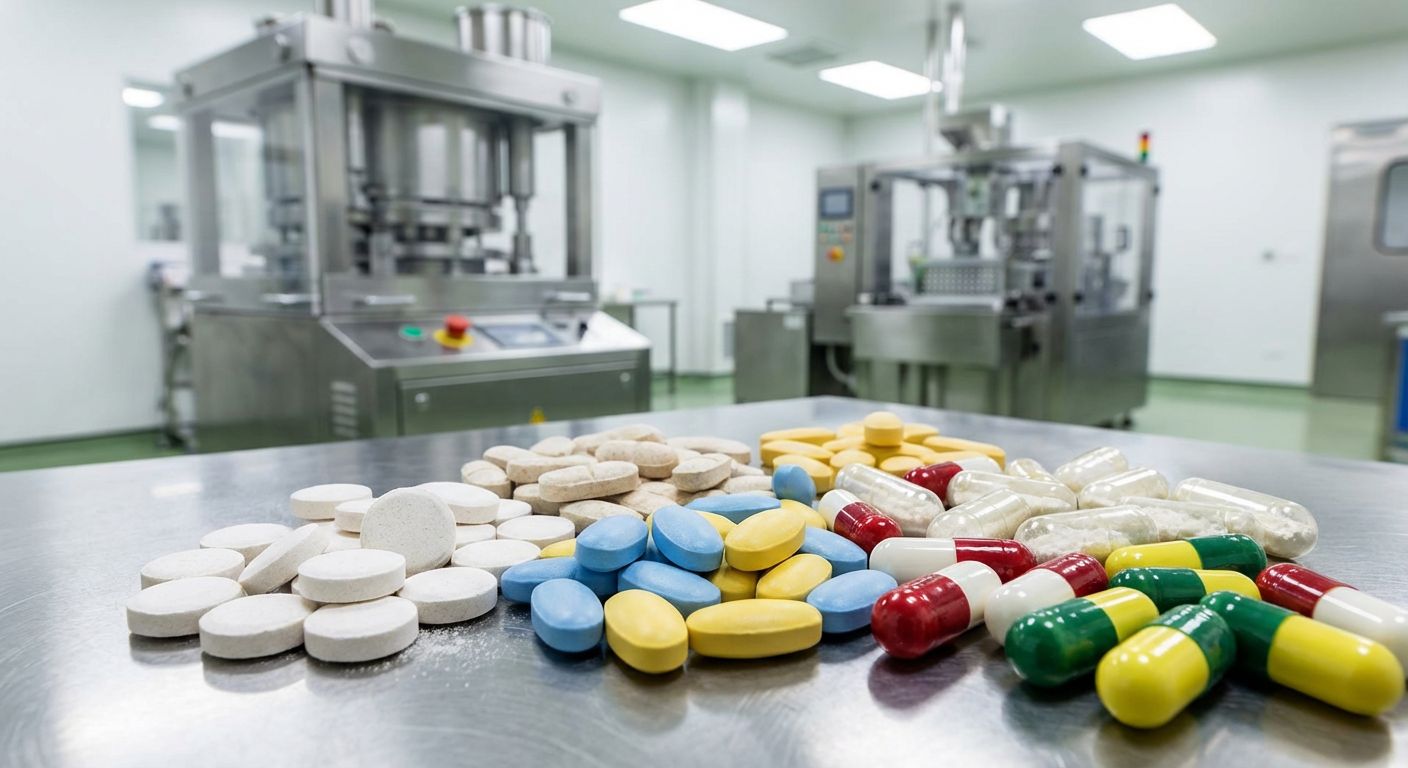
Polipíldoras: Un único comprimido que contiene múltiples principios activos para terapia combinada (p. ej., prevención primaria de enfermedades cardiovasculares). SegúnPolipíldora – WikipediaSu reto de producción radica en aseguraruniformidad de contenidoyestabilidadPara cada componente, se imponen altas exigenciasequipo de mezcla(por ejemplo, mezcladores 3D) yTecnología analítica de procesos (PAT).
Tabletas impresas en 3D:Permiten dosificaciones personalizadas y estructuras de liberación complejas, un punto clave enmedicina personalizadaEl equipo esimpresoras 3D de grado farmacéutico, aunque actualmente la mayoría se encuentran en etapas de I+D.
La liberación de una píldora es su función principal. Según el resumen deTipos de comprimidos farmacéuticos — Especialistas farmacéuticosEl mecanismo de liberación determina el tiempo de inicio de acción del fármaco, la duración de la acción y el perfil de concentración plasmática.
| Tipo de lanzamiento | Principio técnico | Equipo/proceso de producción típico | Medicamentos de ejemplo |
|---|---|---|---|
| Publicación inmediata (IR) | Desintegración y disolución rápidas | Prensa de tabletas estándar, que utiliza superdesintegrantes (por ejemplo, croscarmelosa sódica) | Tabletas de acetaminofén |
| Liberación sostenida (SR)/Liberación controlada (CR) | Controla la velocidad de liberación a través de una matriz de gel, una membrana microporosa o una presión osmótica. | Granulador/recubridor de lecho fluidizado para preparar gránulos o recubrimientos de liberación sostenida; máquina de perforación láser (para comprimidos con bomba osmótica) | Comprimidos de liberación controlada de nifedipina |
| Liberación retardada (DR) | El recubrimiento se disuelve a un pH específico (por ejemplo, intestino). | Bandeja de recubrimiento de alta eficiencia (con sistemas de pulverización precisa y aire caliente) | Comprimidos con recubrimiento entérico de omeprazol |
| Liberación pulsátil | Estructura de ráfaga o multicapa controlada por tiempo | Prensa de tabletas multicapa, tecnología de recubrimiento controlado por tiempo | Medicamentos para la artritis que alivian la rigidez matutina |
La producción moderna de píldoras es un proceso continuo y altamente automatizado. La maquinaria especializada es la piedra angular para hacer realidad los conceptos deCalidad por diseño (QbD)yFabricación continua (CM).
Equipo de granulación:
Granulador húmedo de alto cizallamiento:Mezcla y granulación eficientes, de núcleo a núcleo.granulación húmeda.
Granulador de lecho fluidizado:Integra mezcla, granulación y secado, ofreciendo una buena reproducibilidad del proceso y alineándose con la tendencia deTecnología analítica de procesos (PAT)integración.
Granulador seco (compactador de rodillos): Compacta el polvo en cintas mediante rodillos de compresión y luego los muele, adecuado parasensible al calor o a la humedadmateriales.
Equipos para fabricar tabletas:
Prensa rotativa de tabletas de alta velocidad(por ejemplo, las marcas FETTE, KORSCH): El pilar de la producción moderna, utilizandoalimentadores forzadosyMonitoreo de presión en tiempo realPara garantizar un peso y una dureza de la tableta consistentes. Los últimos modelos integranInspección de visión con IApara el rechazo de defectos en línea.
Prensa de tabletas multicapa:Capaz de producir tabletas de doble o triple capa con alimentación y compresión independiente para cada capa.
Equipos de recubrimiento:
Bandeja de recubrimiento de alta eficiencia:Equipado consistemas de pulverización automatizadosysistemas de control de aire de escapepara garantizar un recubrimiento uniforme y eficiente.
Recubridor de lecho fluidizado: Especialmente adecuado para la aplicaciónrecubrimientos funcionales(por ejemplo, liberación sostenida, recubrimientos entéricos) en gránulos o pellets.
Fabricación y llenado de cápsulas duras:
Máquina para fabricar cápsulas:Forma conchas a través deSumergir alfileres de acero inoxidable en una solución de gelatina.
Máquina llenadora de cápsulas totalmente automática: Realiza la clasificación, separación, llenado, bloqueo y expulsión de cápsulas vacías. Los diseños modulares permiten el llenado con polvos, gránulos, pellets o incluso líquidos.
Encapsulador de cápsulas blandas:
Máquina de cápsulas blandas con matriz rotativa:Dos cintas de gelatina forman bolsas en matrices giratorias, que se llenan y se sellan.
Equipo de procesamiento de gotas: Produce cápsulas blandas esféricas y sin costuras.
Máquina de embalaje blíster:Moldes personalizados según la forma de la tableta/cápsula, integrados coninspección de la visiónydetección de metales.
Línea de embotellado:IncluyeMáquinas contadoras y llenadoras(por ejemplo, contadores multicanal basados en sensores fotoeléctricos),máquinas de algodonero,máquinas tapadoras,máquinas selladoras, ymáquinas etiquetadoras.
Equipos de inspección en línea:Espectrómetros de infrarrojo cercano (NIR)para la identificación de componentes y la comprobación de la uniformidad del contenido;controladoras de peso automáticaspara garantizar la precisión del llenado.
Fabricación continua (CM)Reemplaza la producción tradicional por lotes al integrar procesos desde la materia prima hasta el producto terminado en una línea continua y unificada. Ejemplos comoLíneas de compresión directa continua (CDC)Puede acortar significativamente los ciclos de producción, reducir el inventario de materiales y mejorar la consistencia de la calidad. Las agencias reguladoras (p. ej., la FDA) promueven activamente esta medida.
Digitalización y fabricación inteligente:Integrar más sensores en los equipos, utilizando elInternet industrial de las cosas (IIoT)para recopilar datos y aplicarlosanálisis de big datayInteligencia artificial (IA)paramantenimiento predictivoyoptimización de procesos.
Fabricación de medicamentos personalizados:Más allá de la impresión 3D,líneas de producción flexibles de lotes pequeñosyunidades de producción modularesestán ganando atención para satisfacer las necesidades de producción de medicamentos de ensayos clínicos y medicamentos huérfanos.
Producción sostenible:Desarrolloequipos de bajo consumo energético(por ejemplo, recubrimiento de sartenes con recuperación de calor), promoviendorecubrimientos acuosospara reemplazar los recubrimientos a base de solventes orgánicos y usarmateriales de embalaje biodegradables.
Desde el punto de vista de la producción, ¿cuáles son las principales consideraciones a la hora de elegir entre tabletas y cápsulas?
Las tabletas generalmente ofrecenmayor eficiencia de producción y menor costo, y la maquinaria (prensas de tabletas) está más extendida. Las cápsulas disimulan mejor los sabores desagradables, admiten líquidos y pueden ofrecermayor biodisponibilidad, pero requieren alta precisión demáquinas llenadoras, y los costos de la cáscara están sujetos a las fluctuaciones del precio de la gelatina.
¿Qué son los “controles en proceso” y qué se monitorea durante la producción de tabletas?
Los controles durante el proceso son parámetros clave que se monitorean durante la producción para garantizar la calidad final. Estos incluyen:Distribución del tamaño de partículas y fluidez de los gránulos; durante la compresión:variación del peso de la tableta,dureza,friabilidad; y durante el recubrimiento:aumento de pesoyaparienciaEstos datos a menudo se recopilan en tiempo real mediantesistemas de monitoreo en línea.
¿Cómo una prensa de tabletas de alta velocidad garantiza una calidad constante para cada tableta?
A través de unaalimentador forzadogarantizar un llenado uniforme de la cavidad del molde;sensores de presiónMonitoreo y suministro de retroalimentación para ajustar la posición del rodillo de compresión; unsistema de rechazo automáticovinculado a uncontroladora de peso en líneapara eliminar instantáneamente los comprimidos con sobrepeso o bajo peso.
¿Cómo se “bloquea” el perfil de liberación de una formulación de liberación sostenida durante la producción?
El perfil de liberación está determinado principalmente pordiseño de formulación(por ejemplo, tipo de polímero y proporción) yparámetros críticos del proceso(p. ej., aumento del espesor del recubrimiento/peso de la capa de liberación sostenida). Esto se logra validando unEspacio de diseñoy controlando estrictamente estos parámetros durante la producción. La estabilidad del proceso delrecubridor de lecho fluidizadoes crucial
¿Por qué las tabletas efervescentes requieren entornos especiales para su producción y envasado?
Los excipientes ácido-base de los comprimidos efervescentes son altamente higroscópicos y pueden sufrirprerreacción. La producción debe ocurrir en unaambiente de baja humedad(por ejemplo, una habitación deshumidificada y con aire acondicionado), utilizandomateriales de embalaje altamente resistentes a la humedad(por ejemplo, papel de aluminio compuesto) yMáquinas envasadoras desoxidantes totalmente automáticas.
¿Cuál es el propósito de la tecnología Cápsula en Cápsula y cómo se produce?
Se utiliza para aislar físicamente dos componentes incompatibles o lograrliberación pulsátil dual. La producción requiereEquipo especializado de ensamblaje de cápsulas dentro de cápsulas, donde la pequeña cápsula interior se llena primero y luego se coloca como "contenido" en la cápsula exterior más grande.
¿Qué es “Calidad por diseño (QbD)” y cómo afecta la selección de equipos?
QbD es un enfoque de desarrollo sistemático que enfatiza la predefinición basada en la ciencia y el riesgo del perfil del producto objetivo y el diseño del proceso mediante la comprensión del impacto de los atributos del material y los parámetros del proceso en la calidad del producto. Esto impulsa a las empresas a seleccionar equipos conUn control más preciso de los parámetros del proceso y una adquisición de datos más completa, sentando las bases parafabricación continuayliberación en tiempo real.
¿Cómo cumple el equipo farmacéutico con los requisitos de cGMP (Buenas Prácticas de Manufactura actuales)?
Las cGMP requieren que el equipo sea fácil de usar.limpio(por ejemplo, empleando CIP/SIP - limpieza en el lugar/esterilización en el lugar), prevenircontaminación cruzada(producción cerrada), proporcionardocumentación de validación completa(IQ/OQ/PQ - Calificación de instalación/operación/rendimiento) y tenerpista de auditoríaFuncionalidad. Las superficies de los equipos suelen utilizaracero inoxidable 316L, lisa y sin callejones sin salida.
¿En qué se diferencia fundamentalmente el diseño de una línea de “Fabricación Continua” de una línea tradicional?
Las líneas tradicionales sonbasado en lotes, con operaciones unitarias independientes, almacenamiento de materiales y puntos de transferencia. La fabricación continua esintegrado y unificado, funcionando de forma continua desde la alimentación de la materia prima hasta la salida del producto terminado, con tiempos de residencia del material cortos, un menor espacio ocupado por el equipo y una mayor dependencia deMonitoreo y control en tiempo realsistemas.
¿Cuál es la mayor fuerza impulsora del desarrollo futuro de la maquinaria farmacéutica?
Los principales impulsores sonimpulso regulatorio(fomentando la innovación y la mejora de la calidad),demandas de la medicina personalizada(que requiere flexibilidad de producción), yPresión para reducir costos y aumentar la eficiencia(automatización de conducción e inteligencia).Plataformas de fabricación inteligenteintegrandoPALMADITA,digitalización, yalgoritmos de control avanzadosson la dirección clara.
Descargo de responsabilidad y referencias:
Este artículo sintetiza el conocimiento de la industria disponible públicamente y hace referencia específicamente a las siguientes fuentes profesionales:
Guía farmacéutica.Formas farmacéuticas sólidas: comprimidosProporciona un marco autorizado para la clasificación de tabletas y los procesos básicos.
Especialistas farmacéuticos.Tipos de comprimidos farmacéuticos. Explica los mecanismos de liberación y los propósitos de diseño de diferentes tabletas.
Revista Tabletas y Cápsulas.Tecnología de fabricación de cápsulas: innovaciones que moldean el futuroProporciona información sobre los últimos avances y perspectivas de la industria sobre la tecnología de cápsulas.
Colaboradores de Wikipedia.PolipíldoraIntroduce el concepto, la historia del desarrollo y la importancia clínica de las polipíldoras.
Las descripciones de maquinaria especializada se basan en información técnica pública actual de los principales proveedores de equipos farmacéuticos (p. ej., GEA, Bosch, FETTE, Glatt) y en las prácticas habituales de la industria. Consulte la información oficial para conocer los parámetros de rendimiento específicos de los equipos.

 Jinhai Plaza, No. 21, Jihua 5th Road, Chancheng District, Foshan City, Guangdong Province, China
  +0757 82252350
  +8618613054883
  manager@gdboanmachine.com