
-
 Llámenos +0757 82252350
 -
 Envíanos un correo electrónico manager@gdboanmachine.com



Quick Answers (30-Second Summary)
| Question | Answer |
|---|---|
| Which solid dosage forms cannot be crushed or opened? | Sustained‑release (SR), controlled‑release (CR), enteric‑coated tablets, capsules, sublingual tablets, etc. |
| What happens if you crush these forms? | Sudden spike in blood concentration, mucosal irritation, loss of efficacy, and in severe cases, drug toxicity. |
| How does a capsule filling machine prevent powder leakage and loose caps? | High‑precision metering disk for fill control + stable locking mechanism to ensure tight closure. |
| How does it ensure fill weight uniformity? | Closed‑loop control with high‑precision metering disk, keeping fill variation within cGMP standards. |
| Which international certifications do Boan capsule filling machines hold? | CE, GMP, ISO; key parameters can be recorded and traced, meeting FDA 21 CFR Part 11 requirements. |
| What is the production capacity of Boan capsule filling machines? | Up to approximately 1,200 capsules per minute (over 70,000 per hour). |
| How long does it take to change over between different capsule sizes? | About 5 minutes with modular quick‑release design. |
In clinical and home medication settings, many patients or caregivers crush tablets, split them, or open capsule shells to make swallowing easier. This practice directly destroys the designed structure of oral solid dosage forms, leading to uncontrolled drug release, reduced efficacy, and even serious adverse reactions that can threaten patient lives.
Solid dosage forms that cannot be crushed have clear pharmaceutical definitions and scientific rationales. Their structural integrity directly determines the drug’s release rate, targeted action site, and safety. Capsule dosage forms – as an important part of oral solid dosage forms – rely on intact shells (no breakage, no leakage, tight locking) to protect the contents. Ensuring this integrity at the production level is the first line of defense for the “do not crush” principle.
For pharmaceutical and nutraceutical manufacturers: If the capsule filling equipment itself cannot guarantee shell integrity and fill weight consistency, then safety risks are already embedded at the production stage, regardless of whether patients later crush the product. Therefore, controlling capsule quality at the equipment source is the first step for pharmaceutical companies to fulfill their patient safety responsibilities.
Sustained‑release tablets use polymer matrices or membrane structures to achieve slow, uniform drug release, prolonging duration of action and reducing dosing frequency. Common labels include SR, ER, or “extended release”. Once crushed, the sustained‑release structure is completely destroyed, removing the rate‑limiting barrier. The drug is released in large amounts over a short time, causing a sharp rise in blood concentration, which may trigger dizziness, palpitations, nausea, hypotension, and other acute adverse reactions – in severe cases, drug toxicity. Can sustained‑release tablets be crushed? The answer is always no.
Controlled‑release formulations are a more precise version of sustained‑release, often using osmotic pumps or microcapsule structures to release the drug at a constant rate, maintaining stable blood concentrations and avoiding peak‑trough fluctuations. Crushing destroys the controlled‑release membrane and osmotic pump structure, causing immediate dose dumping. This can easily lead to life‑threatening risks such as arrhythmia, respiratory depression, and sudden blood pressure drops. For cardiovascular and psychotropic controlled‑release drugs, crushing can be fatal.
Enteric‑coated tablets are covered with a layer of enteric coating that resists gastric acid, ensuring the drug dissolves and releases accurately in the intestine. This protects the drug from acid degradation and prevents the drug from irritating the gastric mucosa. Crushing destroys the enteric coating, causing the drug to release prematurely in the stomach, directly damaging the gastric mucosa and causing stomach pain, acid reflux, or even bleeding risk. At the same time, the drug is destroyed by gastric acid, drastically reducing efficacy. Can enteric‑coated tablets be crushed? No – crushing completely defeats their core design.
Capsule shells serve to mask taste, enable targeted release, protect the drug, and reduce throat irritation. Some capsule contents are oily, irritant, or oxidation‑sensitive substances that need the shell to isolate them from air and mucous membranes. Opening the capsule and pouring out the powder destroys the targeted release protection; the powder directly irritates the throat and esophagus, causing choking, numbness, and burning sensations. The drug is also easily destroyed by gastric acid, compromising stability and efficacy. Softgels are semi‑solid dosage forms, often containing oily or liquid active ingredients, and their shell design ensures they remain intact until reaching the intended absorption site.
| Problem Manifestation | Equipment‑Level Root Cause | Impact on the “Do Not Crush” Principle |
|---|---|---|
| Broken capsule shells | Unstable locking pressure, worn tooling, excessive impact from feeding mechanism | Shell integrity compromised, contents prematurely exposed |
| Powder leakage | Incomplete locking, poor fit between metering disk and capsule shells | Content loss, dosage inaccuracy, cross‑contamination |
| Fill weight variation | Insufficient metering disk precision, inaccurate fill force control | Dose deviation, unstable efficacy, compliance risk |
| Deformed capsule shells | Improper separation force, poor adaptability to shell materials | Inability to lock properly, increased reject rate |
The common root causes of these problems are: insufficient equipment precision, outdated control systems, and substandard materials.
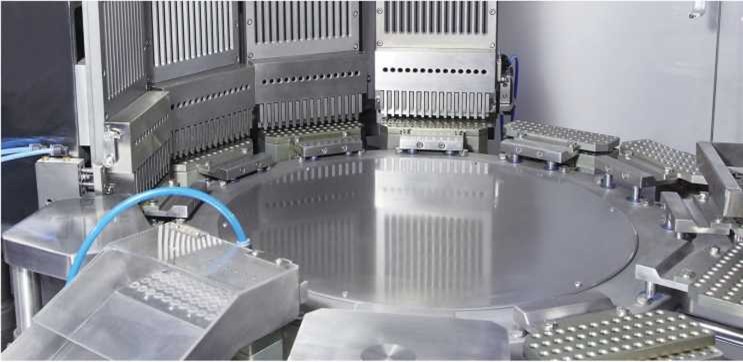
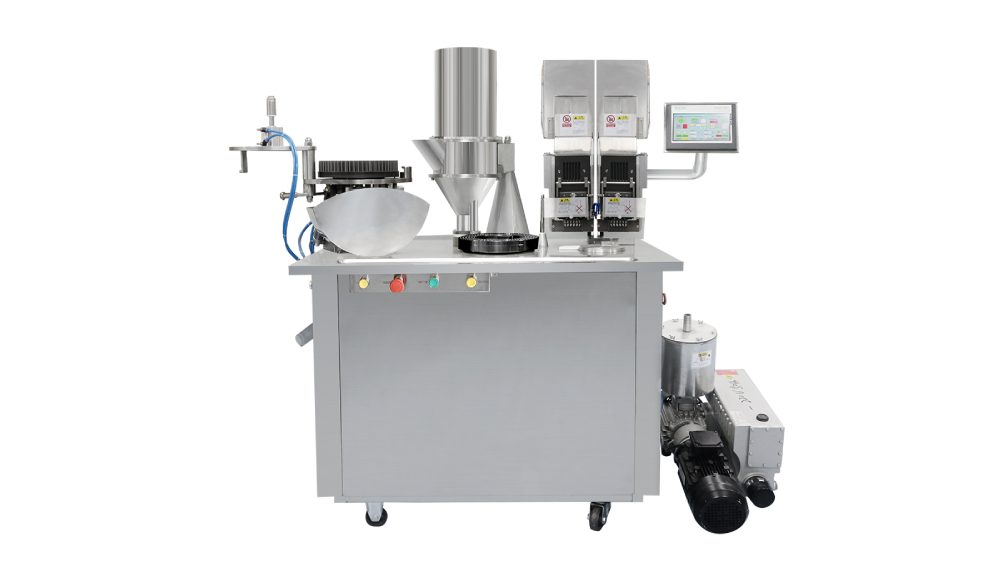
Boan Machinery has over 15 years of experience in pharmaceutical machinery R&D and manufacturing, with products exported to more than 60 countries and regions. All equipment holds CE certification and GMP certification, and the company is ISO‑certified. The following core technologies in Boan capsule filling machines ensure capsule integrity from the very beginning:
Boan capsule filling machines use a high‑precision metering disk to control fill volume, ensuring that the fill uniformity of each capsule meets cGMP standards.
Precision guarantee: Closed‑loop control between the metering disk and fill force keeps fill variation within standard limits.
Material advantage: All drug‑contact parts are made of 304/316L medical‑grade stainless steel – corrosion‑resistant, easy to clean, non‑leaching, and fully compliant with cGMP and clean‑room requirements.
Broad adaptability: Supports all capsule sizes from 00# to 5#, with quick‑change tooling options.
Boan capsule filling machines feature a locking mechanism with stable locking pressure, ensuring tight capsule closure.
No looseness, no powder leakage, no cap detachment.
Maintains the complete shell structure, protecting the contents from moisture, oxidation, and mucosal irritation.
Meets clean‑production standards.
Boan fully automatic capsule filling machines (e.g., NJP series) offer the following core capabilities:
| Capability | Specific Metrics |
|---|---|
| Production capacity | Approx. 1,200 capsules/min (over 70,000/hour) |
| Compliance | Fully enclosed design effectively prevents powder leakage, meeting cGMP pharmaceutical hygiene standards |
| Intelligent control | Advanced PLC touch‑screen system with real‑time monitoring of critical process parameters |
| Data traceability | Critical parameters can be recorded and traced, meeting FDA 21 CFR Part 11 requirements |
| Alarm and protection | Automatic alarm and shutdown on abnormalities, ensuring non‑conforming products are not released |
Boan equipment adopts a modular, quick‑release structure for easy tooling changeover and thorough cleaning with no dead corners.
Parameters can be stored and recalled, reducing setup time.
Consistency of capsule hardness, fill weight, and locking quality is maintained after changeover.
Changeover between different capsule sizes can be completed in about 5 minutes.
|
Comparison Dimension |
Industry Average |
Boan Capsule Filling Machine |
Boan Advantage |
|
Fill weight precision |
Variation ±5‑8% |
Closed‑loop high‑precision metering disk, significantly lower variation |
More accurate dosing, better cGMP compliance |
|
Locking stability |
Pressure fluctuates, prone to loose caps and leakage |
Stable locking mechanism – no looseness, no leakage |
Ensures shell integrity, supporting the “do not crush” design |
|
Material standard |
Ordinary stainless steel |
304/316L medical‑grade stainless steel |
Non‑leaching, easy to clean, cGMP‑compliant |
|
Control system |
Traditional relay control |
PLC intelligent control + real‑time monitoring |
Data traceable, meeting FDA requirements |
|
Changeover time |
30‑60 minutes |
Modular quick‑release, ~5 minutes |
Flexible response to multi‑product, small‑batch orders |
|
Compliance certifications |
Some have none |
CE + GMP + ISO fully certified |
Unrestricted export to 60+ countries |
|
Production capacity |
400‑800 caps/min |
Up to 1,200 caps/min |
50‑200% higher efficiency |
Client Background: A medium‑sized nutraceutical manufacturer specializing in multivitamin and herbal supplement capsules for export to European and American markets. Previously using a low‑end domestic capsule filling machine, they faced persistent problems:
Loose‑cap rate as high as 3‑5%, powder leakage causing frequent downtime for cleaning
Fill weight variation of ±8%, leading to repeated customer complaints about dosage inconsistency
Inability to meet FDA data traceability requirements, blocking export certification
Boan Solution:
Deployed Boan fully automatic capsule filling machine (NJP series)
Configured high‑precision metering disk and stable locking mechanism
Integrated PLC intelligent control system for real‑time monitoring and recording of critical parameters
It uses a high‑precision metering disk for fill control combined with a stable locking mechanism to maintain consistent locking pressure, ensuring tight closure without looseness or leakage. All drug‑contact parts are made of 316L stainless steel, meeting cGMP clean‑production requirements.
Boan equipment features a modular, quick‑release structure for easy changeover and thorough cleaning. Parameters for different capsule sizes (00#‑5#) can be stored and recalled, reducing setup time and ensuring consistency in fill weight and locking quality after changeover.
An optional online weight‑checking module can be integrated to monitor each capsule’s fill weight in real time. Together with the PLC control system, it automatically alarms and rejects non‑conforming products, ensuring 100% finished‑product quality.

 Jinhai Plaza, No. 21, Jihua 5th Road, Chancheng District, Foshan City, Guangdong Province, China
  +0757 82252350
  +8618613054883
  manager@gdboanmachine.com